Tennis Court Construction Specifications in 18-38 m Dimensions
Acrylic Tennis Court Layers
Foundation excavation is carried out for the construction of the designated area. During this process, a 25 cm section is left exposed. Stirrup molds measuring 25-60 cm are formed and connected at the 4 corners with beams using 12mm diameter rebar. Anchor sockets measuring 76-3 are placed inside the molds. After filling 15 cm of the 25 cm section left for the foundation prepared in 18-36 m dimensions with plant mix, a vibratory roller is used for compaction. The remaining 10 cm section is paved with TİP2 wear asphalt using fine gravel. To prevent undulation on the surface, the asphalt coating is washed for 3 weeks to remove foreign matter and allow gases formed within the asphalt to evaporate and escape. Unlike the stages applied during [original sentence fragment], thanks to the designed color layer and line paint layers, it is designed not only for football but also for other sports such as tennis, volleyball, and basketball. It consists of a total of 5 layers: Primer, Resurfacer, Cushion Layer, Color layer, and line paint layer. The Primer layer, applied to increase the adhesion of the asphalt surface where the tennis court will be laid, is a transparent, single-component acrylic polymer. The Resurfacer layer is applied to increase the adhesion of the cushion system and the concrete or asphalt surface. It is mixed with concentrated 100% acrylic latex binder and silica sand and applied to the surface.
Importance of Artificial Turf Application
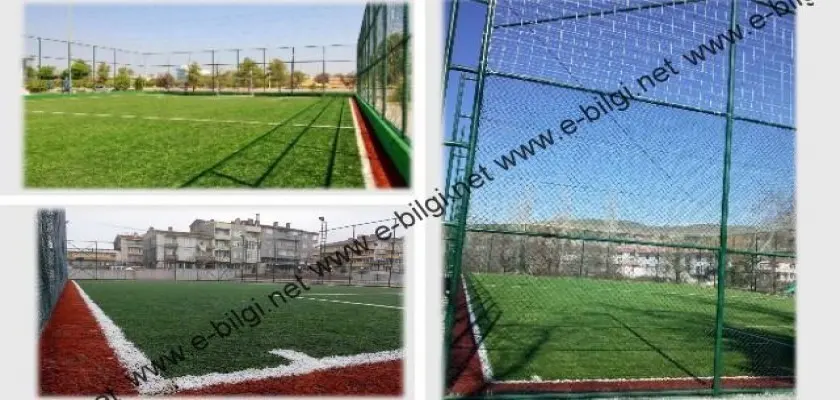
Although it shows similarities in terms of appearance and usage conditions, artificial turf is more advantageous than natural grass during the construction of indoor carpet fields. It is particularly effective in preventing players from slipping and getting injured, and its maintenance is quite easy. Moreover, it offers significant savings in terms of watering costs, maintenance costs, and time spent. The cushion layer, which is the sub-base material for the tennis court, is formed by compacting granulometric rubber particles into a thin layer. This layer, which makes the surface more elastic, is applied in 3 layers over the Resurfacer layer. The color layer and line paint are applied differently according to the construction stages of indoor carpet fields. The color layer, formulated with a specific texture, can be applied in tile red, light green, and dark green upon request. The line paint layer, applied using acrylic marking paint, defines the necessary lines for the playing field.