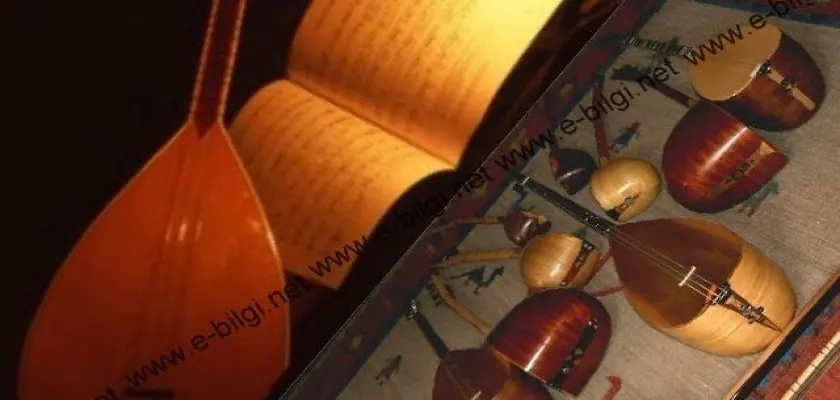
The History of the Bağlama
The bağlama is indispensable to Turkish Folk Music. Bağlamas take on different names according to their purpose of use. The history of the bağlama, which has varieties such as kopuz, cura, saz, çöğür, dombra, ikitelli, tambura, and tar, dates back to very ancient times. The ancestor of the bağlama is thought to be the kopuz. The kopuz, which has a history of 1500 years, is frequently mentioned in the old Dede Korkut stories. The kopuz, used among the Turkic tribes of Central Asia, was initially used by the itinerant bards of the region and was brought to Anatolia by these bards. The kopuz is an instrument obtained by covering the upper part of a gourd with thin hides and adding a neck and strings. Today, the extent to which the bağlama should be made is still a matter of debate. It is accepted that the most beautiful bağlama is made from mulberry wood.
Features of the Bağlama
The bağlama is a stringed instrument. It can be played by hand or with a plectrum. The highest quality bağlamas are made from mulberry wood. Ash, hornbeam, walnut, mahogany, and vengi have also begun to be used in the making of the bağlama. The bağlama consists of three parts: the body, the soundboard, and the neck. It is an indispensable instrument of Turkish Folk Music. It holds a very special place in Alevi belief. The dimensions of the bağlama's body vary between 20 and 52 cm.